Introduction
Dealing with child tooth decay can feel incredibly overwhelming for any parent trying to balance nutrition, bedtime routines, and proper oral hygiene. When you are running around between school drop-offs, soccer practices, and making dinner, trying to make sure your child brushes their teeth for a full two minutes can feel like a major battlefield. But keeping those tiny smiles healthy does not have to be an exhausting mystery. Understanding how child tooth decay starts is the first step toward keeping your little one’s smile bright.
At Grace Dental, we see families every single day who are dealing with the same worries. Parents often wonder why cavities happen so quickly in young mouths or what they can do to stop them before they start. The truth is, primary teeth, what we commonly call baby teeth, are much more fragile than adult teeth.
Their outer protective layer is thinner, which means problems can escalate fast if we do not keep a close eye on things. Let’s break down everything you need to know about protecting your little one’s smile in plain, simple language.
What Exactly Causes Child Tooth Decay?
Many parents don’t realize that child tooth decay is actually the most common chronic childhood disease. It happens much more frequently than asthma or early childhood allergies, yet it is almost entirely preventable. The process starts with the natural bacteria living inside everyone’s mouth. When our kids eat or drink, these bacteria interact with the leftovers left behind on their teeth.
When sugary snacks sit on enamel, bacteria feast on them and produce acid, which leads directly to child tooth decay over time. It is not just candy and soda that cause this, either. Everyday items that we think of as healthy, like milk, fruit juice, raisins, and even crackers, contain sugars and starches that stick to teeth. Every time your child takes a sip of juice or eats a snack, an acid attack begins in their mouth that lasts for about twenty minutes. If they are snacking constantly throughout the day, their tooth are basically sitting in an acid bath. Preventing child tooth decay requires a mix of good habits at home and regular visits to your dentist.

Understanding the Progress of Cavities
Cavities do not just appear overnight out of nowhere. They develop slowly over weeks and months, moving through distinct phases as the structure of the tooth breaks down. To understand how a small spot turns into a major problem, it helps to look at the different tooth cavity stages that occur.
[Stage 1: White Spots] ➔ [Stage 2: Enamel Decay] ➔ [Stage 3: Dentin Damage] ➔ [Stage 4: Pulp Infection]
During the early tooth cavity stages, you might only see a faint white change on the surface of the enamel. This is actually a sign that minerals are leaving the tooth, but the surface is still intact. If caught right here, the process can actually be reversed without any drilling.
As the problem progresses through the standard tooth cavity stages, that white spot breaks down into a dark hole. This means the hard outer layer has officially been breached. If you catch things during these initial tooth cavity stages, a simple dental filling can easily fix the issue. However, waiting until the final tooth cavity stages means the infection reaches the root, often requiring a baby root canal. When the decay reaches the pulp, the soft center of the tooth holding the nerves and blood vessels, your child will likely start complaining of a persistent, throbbing toothache.
How to Spot Child Tooth Decay Early
If you know what to look for, catching child tooth decay before it turns into a painful emergency becomes much easier. Many parents wait until their child complains of pain before booking an appointment, but by the time a tooth hurts, the decay has usually traveled deep into the tooth structure.
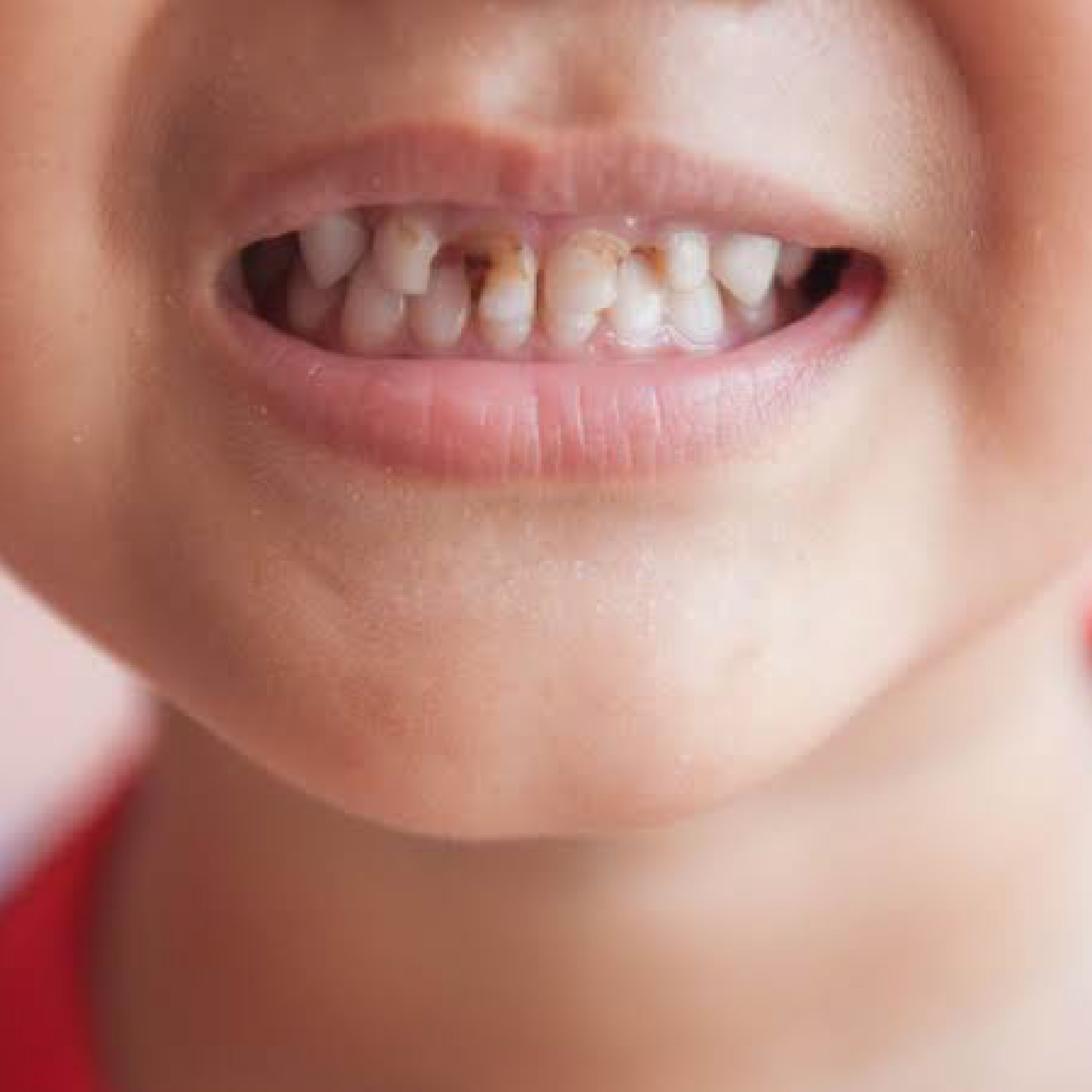
White spots near the gumline are often the very first indicator of child tooth decay knocking on the door. These spots are chalky and dull compared to the shiny, healthy enamel around them. As the condition worsens, those spots can turn light brown or yellowish, eventually forming a visible pit or hole. Left untreated, child tooth decay will move deep into the inner layers of the tooth, causing severe aches. You might also notice your child flinching when they drink cold water or eat warm soup, which points to growing sensitivity from structural breakdown.
At Grace Dental, our primary goal is to stop child tooth decay before it can cause permanent damage to your little one’s smile. We love teaching moms and dads how to lift their child’s lips and look closely at the tooth at least once a month. It takes less than thirty seconds, but it makes an incredible difference in catching issues early.
Why Do My Child’s Tooth Look Discolored?
Another question we hear all the time from parents is why their child’s tooth turns yellow over a short period of time. It can be quite startling to look at your toddler’s smile and notice that the bright pearly whites they started with are beginning to lose their luster. When you notice your child’s tooth is yellow, it could be due to simple plaque buildup or something deeper like thin enamel.
Sometimes, seeing a child’s tooth yellow is just a sign that they need a more thorough brushing technique at night. If plaque, a sticky film of bacteria, is left on the tooth, it hardens into a yellowish substance called tartar that cannot be removed with a regular toothbrush. If you’re worried about why your child’s tooth is yellow, a quick evaluation can pinpoint whether it’s diet or genetics. In some cases, certain medications, iron supplements, or even minor fevers during infancy can cause the developing enamel to take on a darker hue. No matter the root cause, addressing why your child’s tooth is yellow helps restore both their confidence and health.
The Power of Prevention: Strengthening the Shield
When it comes to fighting off mouth acids, we need to actively give the tooth a fighting chance. One of the absolute best tools we have to strengthen enamel is using fluoride for kids safely and consistently. This incredible mineral works by rebuilding the weak spots on the outer layer of the tooth before a full-blown cavity can form.
When used in the right amounts, fluoride for kids acts like a natural shield against destructive mouth acids. It integrates into the tooth structure, making it significantly harder for bacteria to break through. Many parents ask our team about the best ways to introduce fluoride for kids into their daily oral hygiene routine. The key is simply using the correct age-appropriate amounts so that they get all the benefits without swallowing too much.
Using a tiny smear of toothpaste with fluoride for kids is perfectly safe as soon as that very first baby tooth pops up. For toddlers under the age of three, this smear should be no larger than a single grain of rice. Once your child hits age three, you can upgrade that amount to a small, pea-sized dollop. Whether it comes from public tap water or a treatment at our clinic, fluoride for kids is essential for building strong smiles.
Everyday Routines That Save Tiny tooth
Many folks ask if drinking juice before bed contributes to child tooth decay, and the answer is a resounding yes. Putting a child to bed with a bottle or a sippy cup filled with anything other than plain water is one of the fastest ways to cause extensive damage. Saliva slows down at night, making it easier for child tooth decay to run rampant if teeth aren’t brushed before sleep. When your child sleeps, their mouth dries out, removing the natural washing mechanism that helps clear away leftover sugars.
To give you a clear map of how to structure your family’s daily habits, let’s look at a straightforward path for morning and evening routines.
- The Morning Refresh:
Right after breakfast.
Child brushing teeth for two full minutes using a soft-bristled brush. Make sure to angle the brush toward the gums where plaque likes to hide out.
2. Smart Snacking Choices
Throughout the daytime.
Swap out sticky snacks like fruit snacks and crackers for crunchy vegetables, cheese cubes, or plain yogurt. Keep water as the main beverage between meals.
3. The Nighttime Cleanse
Just before climbing into bed.
Floss between any tooth that touches, then have your child brushing tooth thoroughly with the correct amount of mineral toothpaste. After this step, allow absolutely no food or drinks except water.
Investing a few minutes every morning and night to fight child tooth decay saves your family from costly procedures later. It also helps your child grow up without a fear of the dental chair, because their visits will consist of quick, easy cleanings rather than deep fillings or extractions.
Making Dental Visits Fun at Grace Dental
We know that bringing a young child to the dentist can sometimes feel like a daunting task. Many adults carry their own past anxieties into the office, and kids are incredibly good at picking up on those vibes. That is why our team works so hard to create a warm, gentle, and fun environment for every single child who walks through our doors. We never rush our young patients; we explain our tools using playful names and let them explore the chair at their own pace.
Establishing a comfortable dental home early in life sets the foundation for decades of excellent health. The American Academy of Pediatric Dentistry suggests that a child should see a dentist by their very first birthday, or within six months of their first tooth showing up. These early visits are not about major treatments; they are about helping your child feel safe, tracking their growth, and giving you practical tools to prevent problems before they start.
If you want to read more about our specific approach, check out our options at Grace Dental, where we treat your children like our very own family members. From protective sealants that lock out food particles to gentle cleanings that refresh young smiles, we are here to support your parenting journey every step of the way.
Keeping Up the Fight for a Healthy Smile
At the end of the day, remember that you are doing a great job. No parent is perfect, and sometimes a cavity happens despite your best efforts. What matters most is catching it early and adjusting daily habits to protect the rest of the tooth.
By keeping up with cleanings and watching what they eat, you can fully protect your little ones from child tooth decay for life. Keep water bottles filled, make brushing a silly game with songs or timers, and stay consistent. Your dedication today will pay off in a beautiful, healthy, and confident adult smile tomorrow.
References:
https://www.nhs.uk/baby/babys-development/toothing/looking-after-your-babys-tooth
https://www.healthline.com/health/childrens-health/yellow-tooth-kids